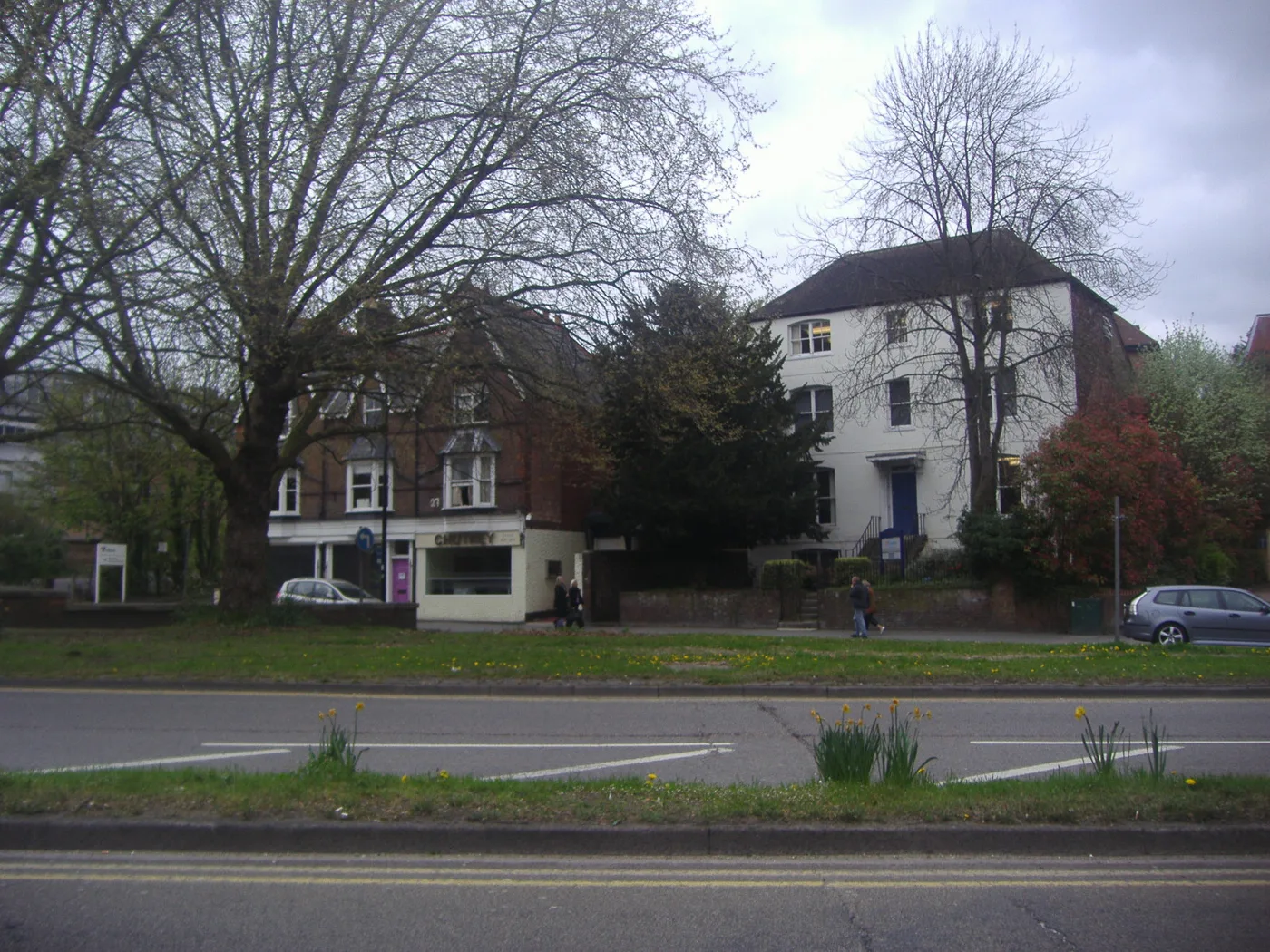

Officers recommend approving a 16-bed hostel at 8-9 Easton Street. The Union Baptist Church next door supports it but wants staffing levels set.
A pair of Grade II listed Georgian townhouses that have stood empty for about ten years would become a 16-bed hostel for homeless people, under plans councillors decide tonight. Officers have recommended approval.
The application is for 8-9 Easton Street, the former Citizens Advice Bureau, and it goes to the West Buckinghamshire Area Planning Committee at 6.30pm on Wednesday 26 August in the High Wycombe Council Chamber, Queen Victoria Road, HP11 1BB. The meeting is webcast.
The applicant is Buckinghamshire Council itself, which is why the decision cannot be taken by officers under delegated powers and has to go before the committee.
What is proposed
The officer’s report sets out a short-stay hostel with 13 bedrooms and 16 bed spaces:
- 10 single rooms and 3 double rooms
- shared bathrooms, a shared kitchen, a communal lounge and dining area
- a staff kitchenette, a staff room and a manager’s room on the ground floor
- a pop-up emergency room for up to five more people during severe weather
- roof repairs, window joinery repairs, a rebuilt rear canopy and a new rear boundary wall
It would run 24 hours a day with staff on site. Unlike a night shelter, residents could come and go for the length of their stay. Entry would be through the Easton Street door, controlled by the hostel manager, whose room sits centrally on the ground floor with sight of the entrance, the circulation space and the communal areas.
Residents would sign up to rules of occupation. Those include a ban on bringing in alcohol or any controlled substance other than prescribed medication. Someone can also be put on a behaviour plan, which the report says could require them to take a breathalyser test and come under an agreed limit to get into the building.
Why here
The supporting information submitted with the application states that High Wycombe has the highest number of rough sleepers in Buckinghamshire, 17 of the 22 found in the last count. The officer’s report records that figure and concludes the hostel would ease the pressures rough sleeping creates in the town centre.
The buildings are part of a terrace of late 18th-century three-storey townhouses in yellow stock brick with Welsh slate roofs and sash windows. The site sits in the High Wycombe Town Conservation Area, with the council offices and the law courts to the east and south and the Easton Street public car park behind.
The objection from next door
Two representations were received from adjacent occupiers. The most substantial came from the Union Baptist Church, which borders the site to the west and runs The Hub.
The church supports a hostel in principle. Its concern is supervision. The report records that vulnerable people use The Hub, including children, young people, older people and adults with learning disabilities, and that the garden at the front of the church sits immediately next door to 8-9 Easton Street.
That garden matters more than it used to. Since the Easton Street car park closed, it has become the main route in for people using The Hub. The church’s worry is that the same garden could attract hostel residents and become a spot for anti-social behaviour.
The other points raised were that a hostel is out of place in an area that is mostly professional and close to the court house, and that the works need listed building consent as well.
The case officer accepts the supervision gap is real. The report says the applicant has not provided details of how many staff would be on the premises at any one time, or whether more than one manager would work across the day and night.
The proposed answer is a condition. Before the hostel opens, an Operational Management Plan would have to be submitted and approved in writing, covering:
- the number of staff on the premises at any one time
- the level of supervision provided by in-house staff
- use of the external areas
- noisy activities such as music, television and games
- a complaints procedure
- how the plan is implemented and reviewed
The listed building
The council’s heritage officer does not object, but is blunt about the risk. A hostel is a more intensive form of occupation than a single house, and the report warns of a higher chance of accidental damage to historic joinery, doors, stair elements and decorative features, plus intensified wear on original fabric.
The heritage officer’s summary calls the effect “a low level of less-than-substantial harm”, outweighed by the public benefit of bringing a long-vacant listed building back into use, but only if the scheme is tightly controlled. A second condition would require a Buildings Management Plan before opening, with a programme of building inspections and measures to stop unauthorised alterations.
Ten conditions are recommended in all. Others cover materials, joinery details for any new windows or doors, external vents and flues, the security gates and bin enclosure, landscaping and ecology. Two dusk bat emergence surveys found no bats leaving the building, and the council’s ecologist is satisfied. The scheme is exempt from the mandatory 10% biodiversity net gain because less than 25 square metres of habitat would be lost.
The other details
- Parking: there is none on site, and none for the previous use either. The council’s standards would require 13 spaces for a hostel of this size and 13.3 for the building’s authorised use, so the report treats the change as a slight reduction. The highway authority raised no objection.
- Room sizes: four of the single rooms, numbers 4, 5, 10 and 11, would be 6.5 square metres against the national minimum of 7.5. The report says that standard applies to permanent homes rather than short-term bed spaces.
- Listed building consent: a separate application, PL/26/00976/HB, covers the same works and will be decided by officers under delegated powers.
- No councillor comments were received, and the site is unparished.
What it means for you
If the committee follows the recommendation, the permission is granted but the hostel cannot open until both management plans are approved in writing. That is the stage where the staffing question the church raised actually gets answered, and it happens after tonight rather than at tonight’s meeting.
If you want to follow it, the meeting starts at 6.30pm at the council chamber on Queen Victoria Road and is webcast. The hostel is item 5. Item 4 is the Glory Park vehicle centre at Wooburn Green. The next meeting of the same committee is Wednesday 23 September.
For everything else moving through the system locally, see High Wycombe planning news. The Easton Street car park closure that changed the route into The Hub is covered in High Wycombe roadworks and travel.
Sources
- Officer’s report and Appendix A on PL/26/00975/FA, West Buckinghamshire Area Planning Committee, 26 August 2026, for the proposal, the recommendation, the conditions, the consultation responses and the representations.
- Agenda for the West Buckinghamshire Area Planning Committee, 26 August 2026 for the time, the venue, the item order and the webcast.
- Application PL/26/00975/FA on the Buckinghamshire Council planning register for the case file and dates.
Have your say